
Building What Comes Next: Ted Lombardi on Growth, Pathways, and TPZ’s Next Chapter
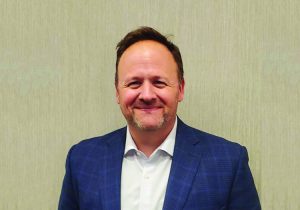
Ted Lombardi, Ed.D., has spent the past two decades helping young people discover meaningful, career-connected pathways. Now, as TPZ’s inaugural Chief Expansion & Opportunity Officer, he’s bringing that passion to gateway cities across Massachusetts. Fresh off settling into TPZ’s new office at Lawrence High School, Ted sat down with us to talk about his unexpected path into education, why pathways matter, and how he envisions TPZ’s next chapter.
What were some of the early influences that brought you to where you are in your career?
My entry into education was anything but traditional. I started out as a sports anchor in Bangor, Maine, and made the switch to education in hopes of teaching journalism. I was planning to work as a paraprofessional for a year or two to figure out how to approach this new chapter. A few days before school started in 2005, the principal at Lawrence High School called to arrange an interview with me for a role teaching special education. The next day I went in, and he offered me the role.
I took the leap, earned my teaching license, and quickly fell in love with the school and the community. I spent 11 years there, eventually becoming principal of one of the then six high schools on the Lawrence High School Campus. When the district went into receivership, I moved to Malden High as principal, then later joined Boston Public Schools, where I focused on college, career, and life readiness, most recently by heading up the Office of Secondary School, which oversees the district’s secondary school programming. Those years cemented my belief that students thrive when they can actually see a future that excites them.
 What did you learn in secondary education that brought you to TPZ?
In the past 15–20 years, high schools have shifted dramatically from a “college for all” mindset to a focus on pathways—structured routes that help students earn college credits, build real skills, and connect their interests to future careers.
Most students fall into what I call the “mighty middle.” They’re motivated, but they need guidance and experiences that link high school to what comes next. Pathways do that. When I was in Boston Public Schools, we already had a large Career and Technical Education footprint, so we focused on growing early college pathways. We went from just over a hundred students in early college programming s in 2021 to more than 1,000 students today. It was exciting work, but it also made something very clear: in many gateway cities—like Lawrence and Malden, where I’d worked—students simply didn’t have access to these kinds of opportunities.
That gap is a big part of why I joined TPZ. The idea that we can bring career-focused, high-quality programming to communities that have been overlooked is incredibly energizing.
What is your role at TPZ?
When people walk into TPZ, they immediately sense something different. Students are engaged, supported, creative, and building skills—teamwork, communication, problem solving—that they’ll use for the rest of their lives. My role is to bring that experience to more students across Massachusetts.
How are you executing on expansion, and what does the regional plan look like?
We’ve started by launching our first expansion site at Lawrence High School. This fall, we opened our Health Assisting career and technical education—or CTE—pathway serving 70 students daily. Our afterschool program will launch in January 2026, building out the full TPZ career-exploration experience there.
Next year, we plan to expand to Lowell and Brockton. Once those initial three are fully established, our plan is to grow into two new regions per year, focusing on gateway cities such as Haverhill, Malden, Worcester, Fitchburg, and Holyoke.
But, we’re not shifting away from Boston—far from it. Boston remains central to TPZ’s identity and impact. The goal is to extend opportunity, not relocate it. Students in smaller cities often have fewer resources and fewer avenues for career-connected learning. In places like Lawrence, which has about 3,500 students, the demand is already evident—students are eager, even “beating down the door,” because these opportunities have been so rare.
Each site will be adapted to local needs, starting with the Health Assisting pathway but eventually expanding into areas like advanced manufacturing and technology AI where interest and workforce demands align. Our model begins as a lean, TPZ-funded operation, with the expectation that districts—and industry—gradually invest after seeing two years of successful outcomes.
Longer-term, we’d love to bring in maker spaces and other hands-on environments as each community grows into the model.
How will you measure success in these new communities?
We begin these pathways with a pilot cohort of 10th graders. Retention and engagement will be key early indicators. We want to see how many students stay with the program through graduation, and how participation influences overall graduation rates—a metric we know tends to rise when students engage in pathways.
We’re also creating multiple output pathways: opportunities that prepare students for college, certification programs, or immediate employment in fields aligned with their interests. Ultimately, we’ll know we’re successful when interest grows, participation is strong, and we’re consistently preparing students to take confident next steps.
What broader benefits do you see this expansion offering to young people and their communities?
As an example, let’s look at Health Assisting. Many cities face critical workforce shortages in healthcare. Training young people locally not only creates strong job pathways, but also brings culturally and linguistically aligned care to communities that need it most.
This is the power of pathways: they connect students to meaningful work, strengthen local economies, and help communities grow their own skilled, compassionate workforce.
Why is TPZ an ideal partner for districts looking to take on emerging education challenges?
TPZ brings more than funding—it brings a proven model. The organization has the staff, curriculum, and values-driven approach needed to engage young people deeply. It’s not a typical nonprofit; it’s constantly asking, “How do we change the game?”
That mindset—innovative, student-centered, and bold—is what makes TPZ such a powerful partner. I’m really glad to be part of that work.
To learn more about what Ted is doing, email him.
Esther Seguin is a freelance writer, focusing on technology and the arts.