
Career-Connected Learning: Are We Willing to Change the System, Not Just the Experiences?
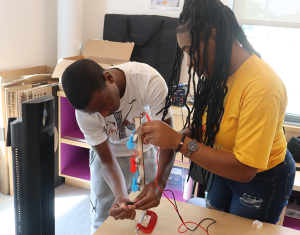 Career-connected learning isn’t a new concept. Over a century ago, John Dewey argued for education rooted in authentic experiences for meaningful participation in society. From vocational education in the early 1900s to the school-to-work movement of the 1990s, educators and policymakers have sought to bridge classroom learning and the world beyond school. Yet many of the same challenges persist: fragmented systems, unequal access to opportunity, and limited recognition of what young people know and can do. For too long, we’ve struggled to make it a coherent part of every young person’s education.
In recent years, career-connected learning has been gaining momentum due to a confluence of factors: AI is reshaping work, pathways to employment are less predictable, economic policies support industry pipelines, and research shows that young people need more than academic knowledge or technical skills to navigate careers. They need opportunities to explore, build relationships, develop durable skills, recognize opportunities, and have a sense of purpose and agency.
One question we keep coming back to is: How are we fundamentally rethinking how young people learn and access opportunity instead of adding career-connected experiences to a system that remains largely unchanged?
To explore this question (and others!) Tim and Meg sat down for a conversation with Chris Unger, a colleague and Teaching Professor at Northeastern University. Meg was bringing insights from her recent participation in EdTech Week NYC and Tim and Chris were carrying forward conversations and ideas sparked at the 2026 FullScale Symposium.

Click to play the 10.31.26 podcast featuring Meg Riordan, Tim Nystrand, and Chris Unger
Together, we discussed several opportunities and tensions that we believe deserve greater attention. We include our audio as well, to bring these ideas to life.
- Career-connected learning should be about agency, not just career preparation.
We often frame success around whether young people acquire the skills employers want. That’s important, but it misses the mark. Having the right skills to get a job is no guarantee for a person’s future job satisfaction, happiness, and sense of belonging and impact in the world around them. Success is helping a young person thrive. Career-connected learning must incorporate learning experiences that help young people discover what matters to them, understand and develop their skill sets, recognize and act on opportunities, and ultimately create futures for themselves that they have not yet have imagined.
At the FullScale Symposium, Corey Mohn, President and Executive Director of CAPS Network, presented alongside CAPS student Zandria Brewer, who shared her journey from her early high school years in Little Rock, AR to her current work as a pediatric travel nurse. Through the experiential learning that CAPS creates, she was able to try on many different career possibilities and discover what she was interested in and what she wasn’t, while simultaneously earning credentials that set her up for each subsequent step in her career journey. That’s work we embrace at The Possible Zone, too.
Classroom learning without application to real experiences doesn’t help young people understand the realities of working in industry. In addition, career-connected learning that doesn’t center on the interests and agency of young people fails to ignite passions and create opportunities for them to thrive. Career-connected learning must fulfill both needs: give students skills to succeed in the workplace while simultaneously help them find their place in the world.
- We need to make learning visible and actionable.
Traditional grades and transcripts tell us relatively little about a young person’s ability to solve problems, demonstrate initiative, collaborate, or navigate ambiguity.
At The Possible Zone, we’re innovating on how students can document their learning, reflect on durable skills, and use AI-supported tools like TPZs Navigator App to better understand their growth and progress on skills like communication, creativity, opportunity recognition, and teamwork.
But visibility by itself isn’t enough. If colleges and employers continue relying primarily on conventional credentials, how does richer evidence of learning translate into actual opportunity? We need stronger connections between learning, recognition, and access across K12, higher education, and industry.
- AI presents both an opportunity and a design challenge.
AI can help young people recognize competencies, deepen reflection, and identify possibilities. It can also shrink creativity, promote cognitive offloading, and turn learning into continuous measurement.
We should be asking whether AI strengthens students’ judgment and agency, not simply whether it makes assessment (or learning in general) more efficient. And we need evidence of impact before scaling tools that promise transformation.
- Equity demands that we redesign the conditions for learning.
It’s easy to encourage young people to pursue their passions and design their futures. But who actually has access to the experiences, relationships, resources, and environments that make those aspirations possible?
For too many students, school remains organized around compliance rather than exploration. Career-connected learning can’t be another opportunity disproportionately available to those who already have social capital.
This is ultimately a systems challenge, spanning K-12, higher education, employers, and community organizations. It requires rethinking educator roles, assessment, partnerships, and the infrastructure connecting learning to opportunity.
The promise of career-connected learning isn’t only that young people become better prepared for work. We’re not creating economic engines. It’s that they develop agency, relationships, skills, and opportunities to shape meaningful lives and contribute to communities.
What are we willing to change, and what are we building in its place?
–By Meg Riordan, Ph.D. and Tim Nystrand
Meg Riordan is Chief Learning Officer at The Possible Zone
Tim Nystrand is Senior Director of Program Design & Delivery