
Earth Day: Empowering Students to Redesign a Sustainable Future
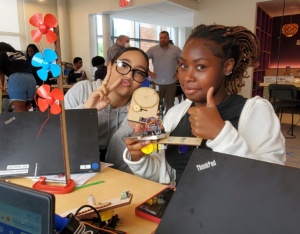 When a young person builds a wind turbine, programs a lighting system to respond to motion and voice commands, or investigates where a structure is losing heat, they are doing more than completing a project. They are learning to see the world as something that can be designed, and therefore something they have the agency to redesign. On Earth Day, that mindset matters because the future of our planet will be shaped not only by what young people know, but by whether they see themselves as capable of re-imagining and rebuilding the systems that sustain it.
Which is why, at The Possible Zone, we focus on exposing students to careers in clean energy and environmental sustainability, even as the field continues to evolve. Our goal is to help students build the confidence, curiosity, and durable skills to navigate a changing landscape. Sustainability is not confined to one industry sector. Energy touches construction. Construction touches design. Design touches technology. Sustainability careers are becoming more interdisciplinary, sitting at the intersections of science, design, ethics, entrepreneurship, and public dialogue. To equip students for careers of the future, they need learning experiences that emphasize not only technical training, but transferable competencies like communication, opportunity recognition, and collaboration. TPZ’s Careers of the Future strategy reflects this clearly by highlighting Construction, Infrastructure & Energy as an in-demand industry and emphasizes career connected learning across many disciplines.
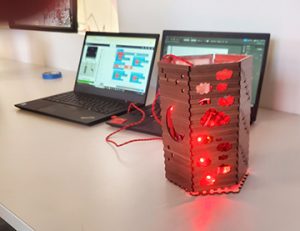 At TPZ, such learning experiences happen through making. In our Clean Energy Deep Dive, developed with support from National Grid, students build circuits, generators, solar arrays, wind turbines, charging systems, and even a small model grid. They test what works, document their process, and present what they have learned to others. In our Lights & Bytes Deep Dive, created in collaboration with Lutron, students design smart lighting systems that bring together coding, fabrication, artificial intelligence, and energy efficiency. They prototype with sensors, microcontrollers, and programmable lighting while connecting their own designs to real-world practices in lighting controls, automation, and energy savings. Across these experiences, students test ideas, troubleshoot what is not working, collaborate with internal and external subject matter experts, and communicate what they are building and why it matters.
That early career and skills exposure is foundational. Sustainability now shapes energy, construction, infrastructure, transportation, advanced manufacturing, and the built environment. These fields will influence how we build, power, and maintain our world for decades to come. For students, that means the opportunity space is broader and more durable than any one job title. That broader opportunity is reflected in workforce data from the International Energy Agency and the U.S. Bureau of Labor Statistics, which point to continued growth across the energy sector and strong demand in renewable energy roles. It’s also reflected in programs like Biodesign Challenge, which point to a future that is interdisciplinary and requires durable skills like adaptability and continuous learning.
Students also need learning experiences that help them see themselves more explicitly in the work. We look at this through the lens of Seymour Papert’s learning theory of Constructionism which suggests that young people learn deeply when they make something meaningful, test ideas, revise their work, and reflect on the process. At TPZ, students not only hear about energy systems or efficient buildings, they build, test, document, and communicate. Through that process, sustainability becomes more than a topic. It becomes something they investigate, take ownership of, and use to shape their own futures.
That learning becomes even more powerful when students build direct relationships with industry. TPZ’s partner model emphasizes site visits, career speakers, volunteer classroom support, mentorship, and curriculum feedback to build awareness, strengthen portfolios, and increase social capital. Our Green Construction Deep Dive with Tremco Rising Stars pushes this further: students work in role-based construction teams, manage budgets, build insulated structures, test thermal performance, and explore a direct pathway into the Achieve Green paid pre-apprenticeship program.
Awareness matters, but experience matters more. As we celebrate Earth Day, the key question is not only how do students learn to care about sustainability, but how can they experience it as meaningful work opportunities that they can participate in and help shape. Through building, testing, documenting, and learning alongside industry partners, they begin to see themselves not just as observers of a changing world, but as people who can help transform it.
Alisha Collins is Senior Director of STEAM and Innovation at The Possible Zone. Her work has been groundbreaking, and she’s a published author of two books, including Biomaking: A Visual Guide to Explore Making with Biology.